Introduction
“Empower a woman, empower a family.”
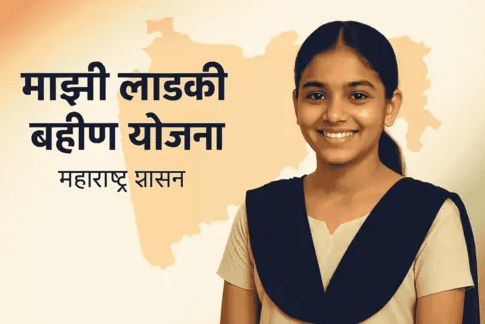
This principle underlies many welfare schemes across India. For example, in Madhya Pradesh, the Ladli Behna Yojana offers cash given to women. This scheme was the catalyst for Delhi to create several of its own initiatives, including the Mukhya Mantri Mahila Samman Yojana, which provides monthly cash. These schemes show politics at its most fluid, acknowledging that women voters now become even more valuable. Most recently, Maharashtra created the Mukhyamantri Majhi Ladki Bahin Yojana. Eligible women receive ₹1,500 every month through this scheme. The government argues that in terms of women’s economic empowerment but also as a security measure for women. While the scheme seems promising for many women, it potentially excludes many thousands of rural women. The challenges that rural women face in accessing the scheme might be explained by the challenges of digital access with mechanisms like e-KYC, and online applications.
Do E-KYC from here- https://ladakibahin.maharashtra.gov.in/ekyc
What the Scheme Promises versus What is Happening on the Ground
The government indicates that this scheme is designed to create seamless Direct Benefit Transfer. Ideally, the mere act of a government announcement means that beneficiaries are able to withdraw their benefits from the bank in their own name. The scheme appears designed for efficiency, modernity, or transparency. However, what takes place on the ground is a much different story. Women in villages who are beneficiaries often are not able to withdraw cash, primarily because of a bank account never associated to their Aadhaar account. Women often use a shared family bank account, or informal saving accounts can be used for exchanging assets. Furthermore, women often do not use a smart phone or have internet accessibility in their homes.
As a result, women have difficulty completing e-KYC or applying online. Technical issues and lack of digital abilities make this even harder. Thus, the scheme’s intention to empower women is in direct conflict with the consequences of exclusion. The policy process gap is exacerbated for the poorest women.
The Digital Divide
The Ladki Bahin Yojana requires each applicant to have an Aadhaar-linked bank account. This requirement was established to ensure direct transfers, but the rule excludes many women. On top of this requirement, if applicants make it to the application stage, the whole application process is via online application. Women need to possess a smart phone, use the internet, and manage digital applications.
However, rural women often rely on others to have this access. Additionally, there are many women who aren’t even aware an application exists. Information does not travel quickly in villages or tribal belts. Posters and websites do not reach remote parts of villages. Therefore, awareness gaps create barriers to participation even before the application. Another digital divide appears between urban women and rural women. Urban women can apply in a timely manner with the digital help of a bank linked to the scheme, while rural women wait in long lines or have incomplete applications. The digital divide is obvious and sharp.
Obstacles Encountered by Rural Women
Numerous obstacles leave rural women at risk in this scheme. For one, banking accessibility issues are serious. Many do not have Aadhaar seeded bank accounts; and even those that do may have inactive or joint accounts. Secondly, the smartphone gap is large. In rural households, the man typically uses the only device in the house. The women in the household may wait or borrow a phone to just attempt applications. Third, digital literacy remains a significant barrier. This makes uploading documents, or filling out forms online, feel impossible. For this reason, applications are slow and rejected.
Additionally, strict deadlines that accompany e-KYC add to this barrier. For a woman simply because she is not able to accommodate certain steps on time, she may lose benefits. Finally, the dependency on middlemen increases. These agents require payment, capture some of the data that women have provided and this adds more corruption. Thus, rural women remain worse off than before the scheme, even if they are the intended beneficiaries.
Consequences of the Digital Divide
The ramifications of digital disconnection are severe. To begin, economic exclusion is evident. The women who need access to financial resources are excluded. Additionally, the gender divide continues to widen. Men frequently control access to the phone, computer, or accounts, driving women’s dependence and decreasing their autonomy. Thirdly, the trust deficit worsens. Each day that the government fails to deliver the assurances made to the population diminishes the public’s trust in government programs. When the recipients have attempted repeatedly to obtain their entitlements with no results, they begin to doubt future announcements from the state. Therefore, the digital divide does more than delay benefits – it affects empowerment, dignity, and credibly of welfare programs. If the digital divide and technological infrastructure is not addressed, it will only deepen over time.
Questions About Policy Raised
The problems associated with Ladki Bahin Yojana raise broader policy issues. Should welfare schemes depend on digital systems so much in a state with poor rural literacy? If access remains unequal, will Direct Benefit Transfer empower? These issues raise serious questions about structure. Rather than filling gaps, Aadhaar seeding and e-KYC create gaps and may result in schemes becoming selective rather than universal. Policymakers must clearly ask whether technology is a tool or hindrance. Hence, thinking through the design of welfare systems is a balancing act between effectiveness and inclusion.
Way Forward
A hybrid model will improve access to the scheme. Offline processes and online processes need to run together. Gram Sevaks and Anganwadi centers can help women fill out forms manually. Awareness drives are also very important, and more local campaigns should be centered on educating women in the simplest language possible regarding eligibility, steps, and timelines. Also, local women can be trained as Digital Sakhi so every village has a woman trained to assist in digital transactions. Banking also needs to be simplified; no-frills, women-centric accounts, like a Jan Dhan account, can greatly reduce banking hurdles. Finally, no grievance redressal system will work unless there are grievance systems to quickly resolve cases where women are denied benefits due to a technical error.
Conclusion
The Ladki Bahin Yojana is a novel programme for women’s empowerment in Maharashtra. However, unless we address the digital divide and ensure access to the programme, it could provide empowerment only to those already digitally connected. Rural women and poor women may still be left out, which goes against the spirit of the concept of empowerment in general.
Empowerment is not simply declaring financial assistance. It is about addressing the digital divide to hereunto this digital age concept intended and delivering the last mile of a digital intervention education concept. Therefore, the success of this scheme depends not just on good intention, but also on inclusive execution. If the state fixes the digital divide and social divide of inclusion, the Ladki Bahin Yojana can emerge as a model for women-centred welfare programming in India.
FAQs on Mukhyamantri Majhi Ladki Bahin Yojana
This is a Maharashtra government scheme for financial assistance to eligible women, which offers ₹1500 monthly support for eligibility.
Women aged 21 to 60 years of age, who have a family annual income of below ₹2.5 lakh.
Yes, Aadhaar seeded bank accounts are necessary to receive benefits through a Direct Benefit Transfer (DBT) basis.
You can register online through the Maharashtra government portal or register offline at Setu Kendras and at Gram Panchayat offices.
Any of the documents or details below must be provided: aadhaar card, bank account details, income certificate, proof of residence, and current professional-size photographs.
If e-KYC is not processed, applications will stay pending until e-KYC is completed. If e-KYC is not processed women may miss monthly cash payments.
Yes, women of the eligible age and income group can apply regardless of marital status.
Yes, the government will announce deadlines to apply and deadlines for e-KYC, and if a woman misses the deadline, she may be excluded.