Introduction
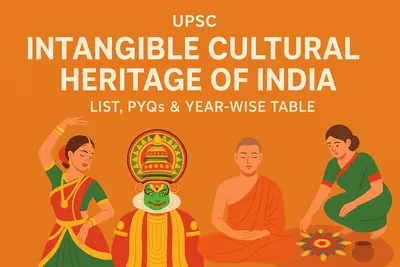
The culture of India is alive and thriving, not kept in museum exhibits. From the songs that engulf us as we cook to the lights that fill the sky during festivals and the spirit of the community, each tradition grows with and moves with us as we pursue everyday tasks.
UNESCO helps to preserve the living parts of cultural heritage through its listing of Intangible Cultural Heritage (ICH). Instead of being monumental structures, ICH includes the parts of culture that are alive and have body and spirit. Dances performed during festivals, items made by hand, skills taught by elders and communicated through generations are examples of the traditions that shape how the community lives.
India celebrates immense pride as UNESCO added the Deepawali (Diwali) festival to the Intangible Cultural Heritage list in 2024. With this inclusion, UNESCO now recognizes 16 Indian cultural elements — each a beautiful, meaningful, and living expression of India’s heritage.
What is Intangible Cultural Heritage?
Definition of Intangible Cultural Heritage by UNESCO:
“Intangible Cultural Heritage refers to the practices, expressions, knowledge and skills that communities recognise as part of their cultural heritage.”
Explanation of Intangible Cultural Heritage Simply:
- Living culture shapes us in ways we may not always feel, yet we remain deeply connected to it.
- The songs sung by our grandparents while cooking;
- The dances performed during festivals;
- The food we cook on special days;
- The skills a family or community has passed down from generation to generation;
- The stories, rituals and celebrations in which we share the experiences of our ancestors; and
- The ability to make and create things with our hands (crafting).
These traditions are not frozen in time. They change, adapt, and grow — but they always keep our identity safe. They make communities feel connected to their roots and proud of their history.
NOTE: For a clearer understanding of how a Governor handles assent, reconsideration, and reservation of bills, you can explore my detailed guide on Articles 200 and 201 here: https://infotrigg.com/articles-200-201/
Five Domains of Intangible Cultural Heritage
UNESCO divides Intangible Cultural Heritage into five groups. These five groups show that culture carries many meanings and expresses itself in many different ways:
1. Oral Tradition & Expression:
These forms of expression include all the different types of oral traditions and expressions. Oral traditions and expressions generally convey by spoken word different stories, poems, chants, or other forms of literature. An example would be the Vedic Chanting.
2.Performing Arts
The ways in which we participate in and develop music, dance, theatre, and other forms of performing art. Examples would include Chhau Dance (a traditional form of dance in India).
3.Social & Ritual-based Practices,festive Events:
All the different types of social and ritual-based events, including customs and celebrations. Example would be Deepawali (a festival celebrated in India) and the Kumbh Mela (a festival that celebrates the religious connection between God and humanity).
4.Knowledge, Practices about the Universe (Nature):
Involves the traditional practices that people have used in agriculture, health care, the cosmos, food cycles, seasons, etc., and examples of these practices are Ayurveda practices among communities.
5.Traditional Craftsmanship:
This category consists of traditional hand skills including weaving, pottery, metalworking, woodworking etc. Brass and Copper Crafting in Punjab illustrates this category.
In fact, in India, most of the traditions are connected to several of these domains; for example, Ramman in Uttarakhand includes performances of the Ram Putra, along with many other artistic expressions of a ritual type.
Significance of Intangible Cultural Heritage
The significance of intangible cultural heritage to people and cultures is, quite simply, this:
- UNESCO recognized intangible cultural heritage, it ensures that it will not die out.
- Attention given to cultures by UNESCO inspires interest and support among those cultures.
- Due to being recognised by UNESCO and due in large part to UNESCO support, artisans, performers and local communities have access to recognition, documentation, and sometimes funding for their work.
- Intangible cultural heritage brings global tourism to the region, since many festivals (such as Kumbh Mela and Durga Puja) attract visitors from all over the world.
UNESCO Intangible Cultural Heritage of India
A national culture builds identity and social cohesion.
A cultural heritage brings everyone in a group together regardless of their religion or language.
Retaining the benefits of traditional knowledge for present purposes. Ancient things are still valid; Yoga, Ayurveda, organic farming, weaving, etc.
| ICH Element | State/Region | Category/Type | Year of Inclusion |
|---|---|---|---|
| Koodiyattam | Kerala | Performing arts (Sanskrit theatre) | 2008 |
| Ramlila | Uttar Pradesh + North India | Performing arts / Theatre | 2008 |
| Vedic Chanting | Pan-India | Oral traditions | 2008 |
| Ramman | Uttarakhand | Ritual + Folk performance | 2009 |
| Mudiyettu | Kerala | Ritual dance drama | 2010 |
| Kalbelia Dance | Rajasthan | Folk dance & music | 2010 |
| Chhau Dance | Odisha, Jharkhand, West Bengal | Martial dance | 2010 |
| Buddhist Chanting of Ladakh | Ladakh | Oral/spiritual tradition | 2012 |
| Sankirtana | Manipur | Ritual music & dance | 2013 |
| Brass & Copper Craft of Punjab (Thatheras) | Punjab | Traditional craftsmanship | 2014 |
| Yoga | Pan-India | Knowledge of nature & universe | 2016 |
| Nawrouz | Parsis + Kashmir communities | Social practices/festive | 2016 |
| Kumbh Mela | Haridwar, Prayagraj, Ujjain, Nashik | Social practices & rituals | 2017 |
| Durga Puja | West Bengal | Social practices & festive arts | 2021 |
| Garba | Gujarat | Performing arts / Ritual dance | 2023 |
| Deepawali (Diwali) | Pan-India | Social practices, rituals & festive events | 2024 |
1. Yoga (2016
A holistic discipline that incorporates various postures, breath methods, and meditation into one practice.
Where is it practised? Daily in homes, schools, parks, etc.; Celebrated worldwide on International Yoga Day (June 21).
Importace- It provides a balance between healing the mind and body; This is one of the most significant cultural contributions of India to the rest of humanity.
Current Relevance: Majorly being worked on by AYUSH, Growing demand for Yoga Teacher certification and Healing Tourism increasing all over the world.
2. Nawrouz (2016)
What is it? New Year to Parsi and Kashmiri communities.
How is it done? By cleaning houses, Cooking traditional foods, Welcoming Family and Praying.
Why is it valuable? Shows the diversity of cultures in India and The shared Persian/Indian ancestry.
Current Relevance: Many People Visiting Kashmir to celebrate Nawrouz; Provides a strong cultural center for the parsis.
3. Kumbh Mela (2017)
What is it? A Gathering involving spirituality from all over the world at four river banks.
How is it done? Millions bathe in the rivers wash away sins; worship, attend religious celebrations and visit Holy places.
Why is it important? It is the ultimate representation of Community, Love, Faith in God and spiritual unity.
Current Relevance: Many countries are now taking advantage of the Kumbh Mela, which UNESCO also recognises as a Safe Guarded Cultural Heritage event.
4. Koodiyattam (2008)
It is Kerala’s ancient tradition of theatre based on the Sanskrit language.
How: Theatre with stylised theatrical language performed and displayed at temples using elaborately stylised movement, facial expression and body language and the oral tradition of slow storytelling and narrative.
Significance: One of the oldest surviving forms of theatre in the world.
Present & Current: The art has been maintained and preserved by the local Tamander Kalamandalam. The interest of the international theatre community has renewed interest for the art.
5. Ramman (2009)
What: Theatrical use of ritual, folk, village festivals and mask dances of the Garhwal Himalayas (Uttarakhand, India).
How: An annual festival performance containing oral storytelling, live music, dancing and the worship of the local diety using masks.
Significance: Serve as a method for preserving the cultural heritage and memory of the Himalayan community.
Present & Current: Due to migration and loss of interest in local practices the community and its people face a large threat to participation in these festivals so there are currently many grassroots and community-based organisations attempting to restore local interest and participation in these festivals through documenting the festival.
6. Mudiyettu (2010)
What: Kerala based ritual dance which depicts the battle between goddess Kali and evil demon Darika.
How: All members of a community (artists, desert people, men, women and children) come together to paint the masks, prepare for the rituals, and perform in temples.
Significance: Mudiyettu displays that theatre, music, dance, and faith can not only coexist side by side, but that they can and do enhance each other.
Present & Current: Mudiyettu is now invited to many national and international cultural festivals; increased awareness of temple tourism has encouraged additional interest in Mudiyettu.
7. Kalbelia Folk Songs & Dance (2010)
What: The traditional dance form of the Kalbelia tribe from Rajasthan, India.
How: The women perform the dance in elegant, flowing black skirts and the men play instruments such as the pungi and dholak while dancing.
Significance: The name Kalbelia derives from the nomadic and eco-friendly lifestyle that these people live.
Current Relevance: A global favourite in folk festivals; provides livelihood opportunities through dance tourism and costume craft.
8. Chhau Dance (2010 )
What: Martial folk dance of Odisha, Jharkhand & West Bengal.
How: Acrobatic movement, colourful masks, mythology of gods, nature & wars.
Importance: Preserve India’s martial art and storytelling traditions.
Current relevance: Chhau mask makers earn money selling to handicraft markets & dance troops perform globally.
9. Ladakh Buddhist Chanting (2012 )
What: Chanting performed in the monasteries of Ladakh by monks.
How: Daily recitations with unique melodies and rhythmic patterns used during rituals connected to the Buddhist faith.
Importance: Preserves Tibetan Buddhist Knowledge and discipline.
Current relevance: An important tourist destination for spiritual tourism and monk education systems.
10. Sankirtana (2013 ) of Manipur
What: Group performances by men only of singing, drumming and dancing taken part in during religious events, life-cycle rituals and Vaishnav worship.
How: The core of Manipuri Vaishnav culture.
Importance: Important to Manipuri Vaishnav culture.
Current relevance: Supported by State Academy, and young people are actively joining.
11. The traditional brass & copper craft (2014 ) of Punjab “Thatheras of Jandiala Guru”
What: Craftsman creating handmade brass and copper utensils.
How: Hammering, shaping and polishing the metal using ancient tools and techniques.
Importance: A rare heritage craft preserving India’s metallurgy knowledge.
Current relevance: A project called “Guru ki Thathiyan”, GI tagged and e-commerce has assisted the artisans.
12. Ramlila (Traditional Theatre) (2008)
What: Drama depicting events from Ramayana
How: Communities perform the entirety of Ramayana on open-air stages during the Dussehra festival
Importance: Upholds moral values and encourages the development of a cultural identity within a community, promotes unity
Current Relevance: Performing Ramlila is shown worldwide on television; large-scale performances of Ramlila in Varanasi and Ayodhya are supported by the Government of India.
13. Vedic Chanting (2008)
What: Oral chanting of Holy Vedic Hymns
How: Vedic chanting is taught in gurukula-like schools using repetition, enunciation and memory techniques.
Importance: Oldest oral tradition in India that has continued without interruption.
Current Relevance: Digital archives are expanding, Vedic schools are proliferating, there is growing interest in Vedic chanting among the younger generation.
14. Durga Puja (West Bengal) (2021)
What: A community-wide celebration of the Goddess Durga.
How: Community-wide artistic pandal creation, idol creation, processions, music and five days of rituals to the Goddess Durga
Importance: A unique blend of piety, artistic expression, and social gathering
Current Relevance: A major draw for cultural tourism; large art and exhibition events for Durga Puja pandals are occurring throughout Europe and North America.
15. Garba (Gujarat 2023)
What: A circular dance performed as a form of devotion to feminine energy or “shakti,” during the festival of Navratri (September through October).
How: Both men and women participate in Garba dances by moving in circles, clapping rhythmically, and using sticks to accentuate their movements.
Why it is Important: The Garba dance is part of the Gujarat state identity, and it represents women’s cultural leadership.
Current Relevance: Garba nights are now celebrated around the world; and discussions are ongoing to GI tag traditional costumes/music associated with Garba.
16. Deepawali (Diwali) – India’s Most Recent Addition to the List (2024)
What: The Festival of Lights represents the triumph of good over evil.
How: Lighting diyas; making rangolis; bringing sweets and/or treats to share; praying to Goddess Lakshmi for prosperity during the coming year.
Why it is Important: The Festival of Lights represents Hope, Family Unity, and Cultural Vitality.
Current Relevance: The Festival of Lights has been adopted globally; the festival has had a significant economic impact; and it is celebrated in over 100 countries around the world.
UPSC Prelims PYQs
| Year | Question (Simplified) | Theme | Correct Answer |
|---|---|---|---|
| 2014 | Garba, Kalbelia, Mudiyettu → Which of these are in UNESCO ICH list? | ICH elements of India | All three |
| 2016 | Yoga, Koodiyattam, Sankirtana → Which are in ICH list? | ICH recognition | All mentioned |
| 2021 | Kumbh Mela → falls under which ICH domain? | ICH Domains | Social practices, rituals & festive events |
| 2023 | Durga Puja of Bengal → Under which UNESCO list? | UNESCO classification | Intangible Cultural Heritage |
Conclusion
India’s increasing number of elements of Intangible Cultural Heritage on the UNESCO list show the world values India’s Living Heritage.
From Yoga to the Festival of Lights; all of the Living Heritage have stories; skills; and emotions attached to them that have been passed down from member of the community for centuries.
“Cultural Preservation is Successful Because There are People Who Value Culture.”
FAQs
1. What is UNESCO Intangible Cultural Heritage?
It is living culture — traditions, rituals, skills, festivals, and knowledge passed down through communities.
2. How many ICH elements does India have?
India currently has 16, with Deepawali (2024) being the newest entry.
3. Why was Deepawali added to the UNESCO list?
Because it represents India’s vibrant living traditions — lights, rituals, crafts, community bonding, and cultural unity.
4. Who decides what gets added to UNESCO’s ICH list?
UNESCO’s Intergovernmental Committee reviews and approves nominations submitted by member nations.
5. Does ICH recognition give legal protection?
It does not provide legal rights, but it increases funding, documentation, safeguards, and global recognition.