UPSC Polity

Types of Majority in Parliament: Easy Breakdown for Exams

Introduction: Why “Majority” is Important This Winter Session At the start of Parliament’s Winter Session, there are many different types of bills that will be debated, as well as constitutional amendments and other policy reform proposals. Some proposals require a simple majority for passage while some require specific types of legislative majorities. As a result, […]

Types of Majority in Parliament: Easy Breakdown for Exams Read More »
CJI of India

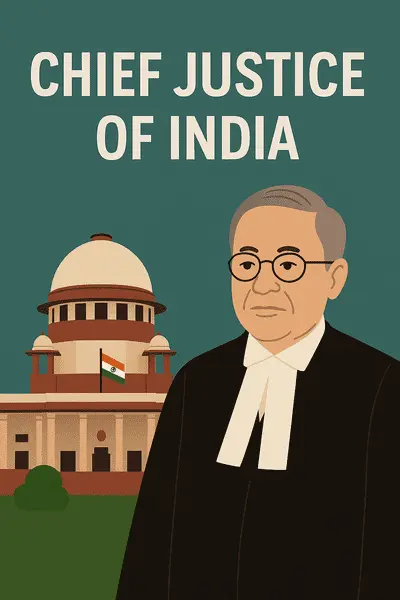
CJI of India: Role, Authority, History & Gender Debate

Introduction Recently, Justice Suryakant has taken the oath as Chief Justice of India. The Chief Justice of India (CJI) is the highest-ranking judge in the country and the head of the entire judicial system. If the courts function as the Constitution’s “brain,” the CJI directs that brain to render justice.  The CJI’s function is significant because

CJI of India: Role, Authority, History & Gender Debate Read More »

Tribunals

Tribunals in India: SC Strikes Down Provisions, Articles 323A–323B Explained

Introduction Dr. B.R. Ambedkar: “An independent judiciary is the soul of our Constitution. The Supreme Court has recently invalidated parts of the Tribunals Reforms Act, 2021, finding that many provisions were a re-enactment of the constitutionally void Ordinance of the same name, invalidated in the Madras Bar Association case. The Court found that these provisions

Tribunals in India: SC Strikes Down Provisions, Articles 323A–323B Explained Read More »

Feminist Concept of Citizenship

The Feminist Concept of Citizenship: From Exclusion to Empowered Belonging

Introduction: The Global Reality of Women’s Inequality In 1980, a landmark UN report revealed a shocking truth: Women form half of the world’s population, contribute two-thirds of its work hours, receive only one-tenth of global income, and own less than one-hundredth of the world’s property. This contrast between contribution and reward reflects a deeper issue—citizenship

The Feminist Concept of Citizenship: From Exclusion to Empowered Belonging Read More »

Articles 31A, 31B, and 31C

Articles 31A, 31B, and 31C: Balancing Property Rights, Socialism, and Judicial Review in India

Introduction “The fundamental rights must harmonize with the directive principles — for liberty without equality can be hollow, and property without justice can be tyranny.”— Jawaharlal Nehru, during debates on the First Constitutional Amendment, 1951 When enacted, the Indian Constitution gave the Right to Property as a Fundamental Right, under Articles 19(1)(f) and 31, ensuring

Articles 31A, 31B, and 31C: Balancing Property Rights, Socialism, and Judicial Review in India Read More »

Scroll to Top