Introduction
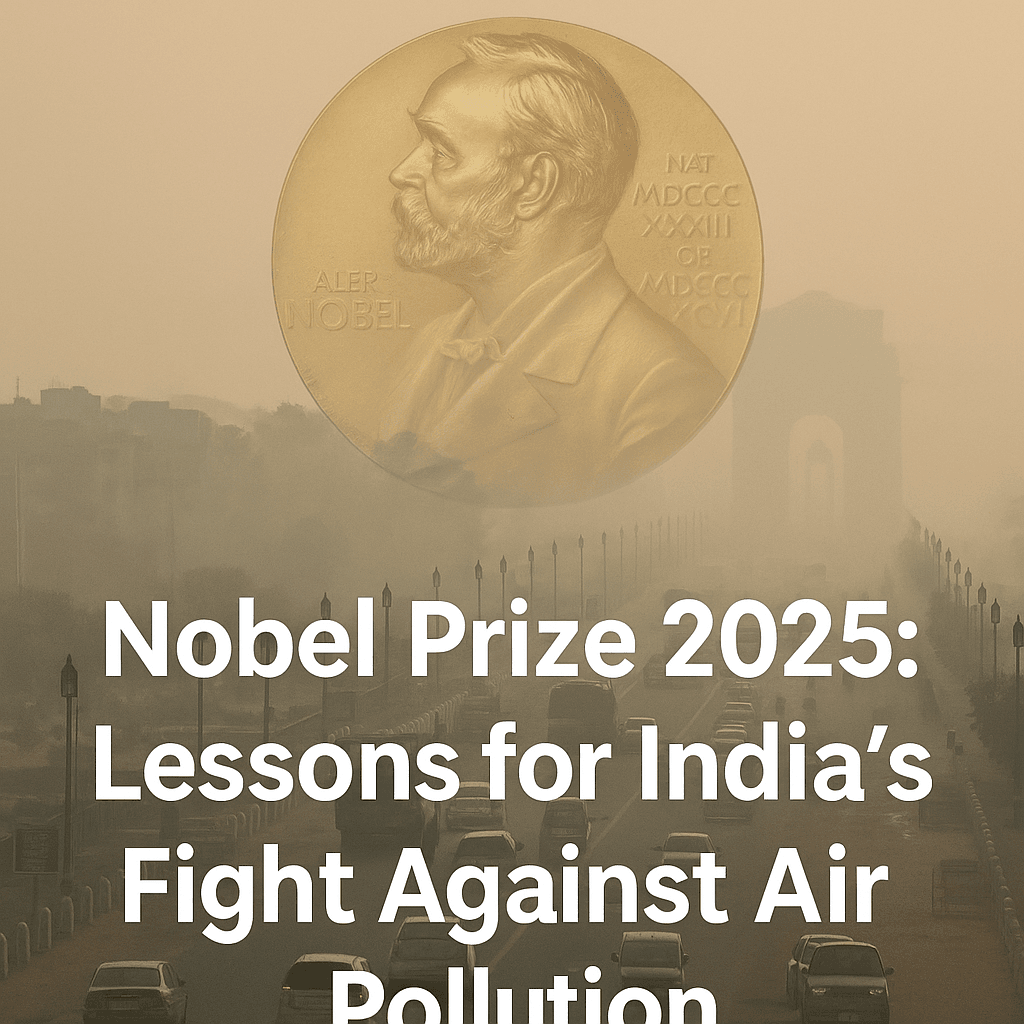
Once again, the air quality in Delhi has become dangerously toxic. For years, bans and campaigns to improve air quality have been unsuccessful, as the city’s winter smog continues to push the Air Quality Index (AQI) beyond 400 (“very poor” or “severe”) and put public health at serious risk.
This year was no different, even after the Supreme Court permitted the use of “green crackers” during Diwali to curb emissions associated with sparklers and fireworks. After Diwali, the ratings were unsurprisingly dismal, as, one week later, the AQI remained at 161, making Delhi 1.3 times more polluted than the national average. Breathing Delhi’s air over the last year has been likened to smoking 6.7 cigarettes a day, a confirmed indicator of how habitual pollution has become—simply part of life in urban settings.
There are numerous causes of the poisonous haze:
- Millions of vehicles releasing exhaust in traffic that chokes narrow lanes around the city.
- Construction dust and burning waste contribute to suspended particulate matter in the air.
- Smoke from crop residue fires from neighbouring states towards Delhi’s south and west.
- Industrial emissions and coal-based power plants releasing toxic gas during the winter inversion layer when pollution is worst.
When all of these elements are engaged together, they create a deadly combination: a perfect storm making India’s capital a gas chamber every winter.
This raises the question: Will the application of Nobel-winning science and human resolve produce a solution for clean skies?
Remarkably, the 2025 Nobel Prizes — covering topics from quantum physics to chemistry and economics — not only celebrate scientific achievement; they are also a models of innovation, resilience, and governance that can be leveraged by India in the fight against pollution.
Read about Wildlife Protection Act-1972 from here.
History of the Nobel Prize
The Nobel Prize has a long-standing history, originating in 1901 in the last will and testament of Alfred Nobel as an award that recognizes individuals or organizations which have provided “the greatest benefit to mankind” in Physics, Chemistry, Physiology/ Medicine, Literature, and Peace and subsequently, Economic Sciences.
Over the decades, the Prize has emerged as the highest global accolade in relation to new and transformative ideas- from penicillin to climate science. The prize is an embodiment of intellect, courage, and compassion- all of which are values India holds dear in relation to its own civilizational value of “Vasudhaiva Kutumbakam” (the world is one family).
The Science of Clean Air — Physics & Chemistry
The Nobel Prize in Physics for 2025 was awarded for the discovery of macroscopic quantum mechanical tunnelling and energy quantisation in an electric circuit. The recipients-John Clarke, Michel H. Devoret, and John M. Martinis showed that even relatively large systems — systems sufficiently large to hold in one’s hand — could show quantum behaviour.
The Nobel Prize in Chemistry for 2025 was awarded to Susumu Kitagawa, Richard Robson and Omar M. Yaghi who developed metal-organic frameworks (MOFs). MOFs are new and sophisticated molecular architectures with internal pores through which gases and chemicals can flow and become trapped.
Relating this to pollution governance in India/Delhi:
Quantum sensors & monitoring:
The advances in quantum phenomena suggest that we may be at a point where quantum sensors, operating extremely sensitive, could detect minute whether in content (including trace gas and even nanosized and nanoparticle) all the way to pollution and usability, is the niche for quantum phenomena.
For the Delhi context, this translates into the potential to install a very granular (city-wide) sensor network that will pick up pollution fluctuations at a hyper-local scale (street-building), as opposed to exact averages over broad zones.
Predictive modelling using quantum phenomena
Our insights into the quantum effects of energy quantisation and tunnelling suggest that the modelling of complex, dynamic (pollutant dispersing across the atmosphere) systems could benefit from being quantum-informed — and thus, governance agencies (e.g., Central Pollution Control Board or State pollution control boards) could predict smog events, demystify tunnelling of pollutant plumes across layers, and proactively strategise solutions.
MOFs & pollutant capture/filtration
The MOF work opens up opportunities for pollution management in real-life scenarios. In Delhi, for example, industries or even municipal waste incineration plants could feasibly install filters using MOFs to trap carbon-dioxide, volatile organic compounds (e.g., VOCs), or noxious gasses produced by brickyards, or other pollutants. Similarly, a vehicle emission control system or construction dust emission could even retrofit with a MOF coating for filtration applications.
Pilot opportunities
Suppose we imagined a pilot initiative, by IIT Delhi or CSIR, with offerings of
(a) quantum sensor deployment in two of the most congested wards of Delhi monitoring levels of PM2.5, NO₂, ultrafine collection of particles;
(b) deployment of filters made from MOFs in buildings at a brick kiln cluster on Delhi’s periphery to capture dust/VOC emissions.
The purpose of these pilots would be to substantiate the roadmap from laboratory to municipal governance.
Connecting macroscopic quantum mechanical tunneling and energy quantization to pollution reduction
On first glance, quantum tunneling and discrete energy levels might seem very far from the discussion of air pollution. However, the relevance is about precision and scale-bridging quantum tunneling demonstrates that particles (or energy) can cross barriers we had thought impermeable – similarly, pollutant plumes might be able to “tunnel” through inversion layers or urban canyons in a fashion we do not expect.
If we can model these behaviors by means of these quantum-inspired frameworks then we can gain understanding in how pollutants will be concentrated or dispersed across a plain. Energy quantization simply begs us to acknowledge the pulsed nature of pollutant systems rather than smooth continuous flows. The pulsing systems can suddenly jump – for example as wind shifts, temperature changes or building downwash occurs – to create spikes of concentration.
Therefore now we can have shift in governance thinking from broad averages – as in daily AQI – to discrete event triggers – when a continuous micro-sensor detects a “tunneling” spike. This would enable a real time response system for governance Canadian air for example.
In brief: the physics prize suggests next-gen monitoring, sensing and modeling; the chemistry prize suggests next-gen filtration and capture. Together as a strongly paired duo they signify the long awaited frontiers of the “science of clean air” that Delhi (and India) very much needed.
The Biology of Resilience – Medicine
The 2025 Nobel Prize in Physiology or Medicine awarded Mary E. Brunkow, Fred Ramsdell, and Shimon Sakaguchi for their pioneering work on peripheral immune tolerance . Significantly, a system in the body which prevents the immune system from attacking the body itself.
This discovery teaches us a lesson about India’s pollution challenge. Just as our bodies can become ill due to an exaggerated immune response, our environments are reacting to an unlimited stimulus from human activity – suffocating our cities, eroding health, and inducing inflammatory responses both environmentally and amongst humans. In Delhi and other urban centers, chronic exposure to ambient air pollution is contributing to increases in asthma, bronchitis, COPD, cardiovascular pressure, and autoimmune disorders.
And just as these scientists showed how the body achieves internal homeostasis, India’s health governance will need to find a way to promote environmental tolerance, not in the sense of suffering poor air quality, but through public resilience.
The policy vision to promote public resilience would involve:
- Establishing “Clean Air Clinics” staffed with clinicians in major cities – a specialized unit of providers in government hospitals will diagnose, treat, and track pollution-related diseases.
- Launching a Pollution-Resilience Health Mission involving health ministry, pollution control boards, and institutes of health research such as AIIMS (All India Institute of Medical Sciences). This body will track the effects of polluted air on immune health throughout time, evaluating the long-term impact on public health.
- Raise awareness at the community level regarding the slow insidious effects of pollution – similar to vaccination campaigns, but for respiratory and environmental health.
What we learn from the Nobel in Medicine is that balance – between growth and restraint, between immunity and overreaction – is what matters. If we can learn to balance the environmental “immune system” in India, cities such as Delhi may yet be able to breathe again.
The Culture of Awareness – Literature & Peace
Pollution is not merely a scientific challenge, it is a cultural challenge, a civic challenge. The 2025 Nobel Prizes in Literature and Peace remind us that regeneration of the environment begins with collective compassion and courage as citizens.
Hungarian novelist László Krasznahorkai, recipient of the Nobel Prize in Literature, writes about apocalyptic anxiety and human endurance; a reflection of our own smoke-cast cities where clouds of grey often reflect despair. He also reminds us that belief in the power of art and stories, whether in literature or other forms of narrative, can help reclaim consciousness. In India, writers, cinema, and public art must do all of this – compel citizens to take seriously the goal of clean air, not as a privilege, but as an inalienable right. Therefore, Environmental empathy must be part of India’s collective imagination.
Maria Corina Machado, recipient of the Nobel Peace Prize for her struggle for democracy in Venezuela, reminds us of something equally important.
Real progress — be it political or environmental — always assumes a culture of public engagement and civic duty. The movement she founded for democracy captures the same civic courage needed to confront pollution: everyday citizens seeking accountability, transparency, and sustainable urban governance.
Takeaways for governance:
- Encourage the public to monitor air quality by citizen-driven use of mobile app technology and sensors in the community.
- Encourage eco-clubs in schools and colleges to fuse ecology with art and creativity in the form of theatrics, poetry, and designing beautification art installations.
- Bring environmental education and civic engagement into local governance — make everyone a stakeholder in Delhi’s clean air action.
In concert, the messages from Krasznahorkai and Machado embody the cultural spine of the struggle against pollution — empathy through art; democratic engagement empowerment. When residents genuinely see clean air as both a moral and democratic right, then and only then will the environmental movement in India take flight.
The Economics of Innovation —Sustained Growth
Pollution control is not solely an environmental obligation — it is an economic opportunity. India’s transition to a low-carbon economy can follow what economists call “creative destruction” — i.e. innovation replaces old, polluting industries.
This concept, at the core of Nobel laureate Paul Romer’s theory of “endogenous growth,” asserts that technological innovation leads to sustained economic growth along an indefinite timeline. Hence, If India embraces this position, its Green Industrial Policy — promoting electric vehicles, solar energy, carbon markets, and clean manufacturing — can fuel pollution as an economic multiplier.
When India combines industrial incentives with sustainability, it can draw global investment, generate green jobs, and shift the economy from pollution-led growth to innovation-led growth.
UPSC Relevance
| Theme | Topic Linkage | PYQ Example | UPSC Segment |
|---|---|---|---|
| Technology & Innovation | Nobel-winning advancements (quantum computing, clean energy chemistry) | 2020: “How do hydrogen fuel cells work as a clean source of energy?” | GS Paper 3 – Science & Tech |
| Environment & Pollution | Air quality, industrial emissions, and policy frameworks | 2021: “Discuss the challenges in controlling vehicular emissions in urban India.” | GS Paper 3 – Environment |
| Economics & Sustainable Growth | Green industrial policy and creative destruction | 2019: “What are the advantages of the ‘Circular Economy’ model?” | GS Paper 3 – Economy |
| Health & Environment | Medical resilience and pollution-linked diseases | 2022: “How does environmental degradation affect public health?” | GS Paper 2 – Social Justice |
| International Awareness | Nobel Peace and climate diplomacy | 2015: “Explain the role of global awards in advancing environmental cooperation.” | GS Paper 2 – IR/Environment |
Conclusion
From quantum circuits to poetic vision, this year’s Nobel laureates remind us that innovation, empathy, and courage — not merely regulation — are what will enable India to breathe freely again. The struggle against pollution is not just a technological endeavor, but a moral, a medical, and a cultural revolution. Therefore, A clean sky starts not the bans or blame, but believing that science, policy, and human empathy can together restore balance between development and survival.
FAQs
Each year’s Nobel discoveries — in Physics, Chemistry, Medicine, and Peace — often target sustainability at the core. Whether clean energy breakthroughs or climate diplomacy, Nobel prizes act as catalysts to environmental innovation.
Technology including AI-based air monitoring, carbon capture, and electric mobility (battery related Nobel research), can dramatically reduce emissions in both transport and industry.
Toxic air hurts the lungs, heart, and brain via exposure. It undermines immune tolerance and leads to chronic disease states. The immunology medical Nobel stressed that our immune resilience to diseases is aligned with environmental health.
With green tax breaks, carbon credits, public-private R&D missions, India can provide an economic path to sustainability: turning regulation into an opportunity.
Glossary: Key Terms Explained
| Term | Meaning |
|---|---|
| Quantum Tunneling | A phenomenon where particles pass through barriers they normally shouldn’t — crucial for modern electronics and sensors. |
| Creative Destruction | Economic process where innovation replaces outdated industries, driving progress. |
| Endogenous Growth Theory | Nobel-winning idea (Paul Romer) that innovation and ideas within an economy are key to its growth. |
| Carbon Capture Technology | A process that traps CO₂ emissions from industries to prevent them from entering the atmosphere. |
| Green Industrial Policy | Government policies that promote environmentally friendly industries and technologies. |
| Immune Tolerance | The body’s ability to avoid overreacting to harmless substances — crucial in understanding pollution-linked allergies. |
| Inversion Layer | A meteorological condition where cool air traps pollutants close to the ground, worsening smog. |
| PM2.5 / PM10 | Fine particulate matter that penetrates deep into the lungs and bloodstream, causing health hazards. |
| Circular Economy | A sustainable model focused on reuse, recycling, and resource efficiency. |
| Carbon Credit | A permit allowing a country or organization to emit a certain amount of carbon dioxide — tradable in carbon markets. |

Great !!